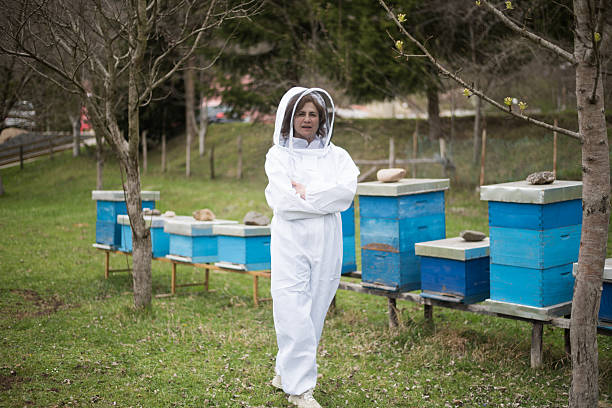
Beekeeping with mesh suits has become popular with beekeepers that work hot summer months or in hot climates.
A frequently asked question with mesh suits is:
Can bees sting through mesh fabric?
To answer that question; it depends on the design, quality, and fit of the mesh bee suit. We will explain the basics of mesh protection and how suits differ. Then we will explain what to look for when choosing the right beekeeping suit.
How the Bee Sting Works
A honeybee stinger is quite short, on average 2 mm. For a sting to penetrate skin, two requirements have to be met:
-
The stinger has to be able to reach the skin.
-
The material has to be close or pushed against the skin.
-
This is where the mesh bee suit design is important.
Can a Bee Sting Through Mesh?
✅ Yes, but only under specific conditions.
A protective suit with mesh fabric is usually safe, as long as it is:
-
Correctly sized
-
Constructed with extra layers or thicker mesh
-
Designed with no contact between the mesh and skin
However, a bee can definitely sting through mesh fabric if:
-
The mesh is tight enough to the body (arms, thighs, shoulders)
-
The mesh is too big
-
The suit is poorly made or too old
-
The suit is too tight or too big
The problem is not with the mesh, it is the distance and structure of the suit.
The reason why a quality mesh bee suit works so well
A well designed bee suit doesn't rely on blocking stingers with fabric. It uses air as an insulator.
Some advantages of a properly designed mesh suit include:
🐝 It provides a physical separation between fabric and skin
🌬️ It has improved airflow which helps with heat and sweat mitigation
🧵 Stingers will not reach you due to the layered construction of the mesh
🛡️ Less overheating means less aggressive behavior from the bees
It is easy to see why a high quality mesh bee suit is preferred by professional beekeepers over traditional cotton suits.
Possible Areas of Sting in a Mesh Suit
Although a good mesh bee suit will give you good protection, some parts of the mesh suit can be unprotected and vulnerable due to poor construction:
-
Elbows and knees (the fabric compresses and creates gaps when you move)
-
Thighs when you bend down to squat
-
Back and shoulders when you lean
-
Wrists, ankles, and zippers if the seams are not sealed properly
This is why reinforced areas and mesh construction are equally important when it comes to the tailoring of the suit.
How Safta Bee Designs Safer Mesh Protection
We focus on the real-life beekeeping aspects of the mesh bee suit instead of the marketing spins, as we create and sell beekeeping suits, beekeeping gloves, and other protective clothing and offer services and products for beekeeping.
When it comes to our designs, the focus is on:
✔ Multi-layer mesh
✔ High risk area reinforcement
✔ Non-compressing structures for sting-safe distance
✔ Ankle, wrist, and zipper closures
✔ Comfortable, confident, and calm hive working
At Safta Bee, we believe a mesh bee suit should feel light and breathable, and not make you feel at risk.
Is a Mesh Bee Suit Right for You?
A mesh bee suit is an excellent choice if:
-
You work in hot or humid conditions.
-
You spend long hours in the apiary.
-
You want maximum ventilation with reliable sting resistance.
-
You choose a well-fitted, high-quality design.
But, for aggressive colonies or heavy honey harvests, pairing a mesh suit with the right technique and calm hive management is still necessary.
Final Verdict
Can bees sting through mesh fabric?
👉 Not really, and definitely not with a properly designed mesh bee suit.
A properly designed mesh bee suit made with the right materials, structure, and fit will provide great protection while keeping you cool and comfortable.
At Safta Bee, we believe beekeepers should not have to choose safety or comfort. With the right gear, you can have both.
Share:
Risks involved with beekeeping suits
How Many Stings Are Normal When Wearing a Bee Suit?