
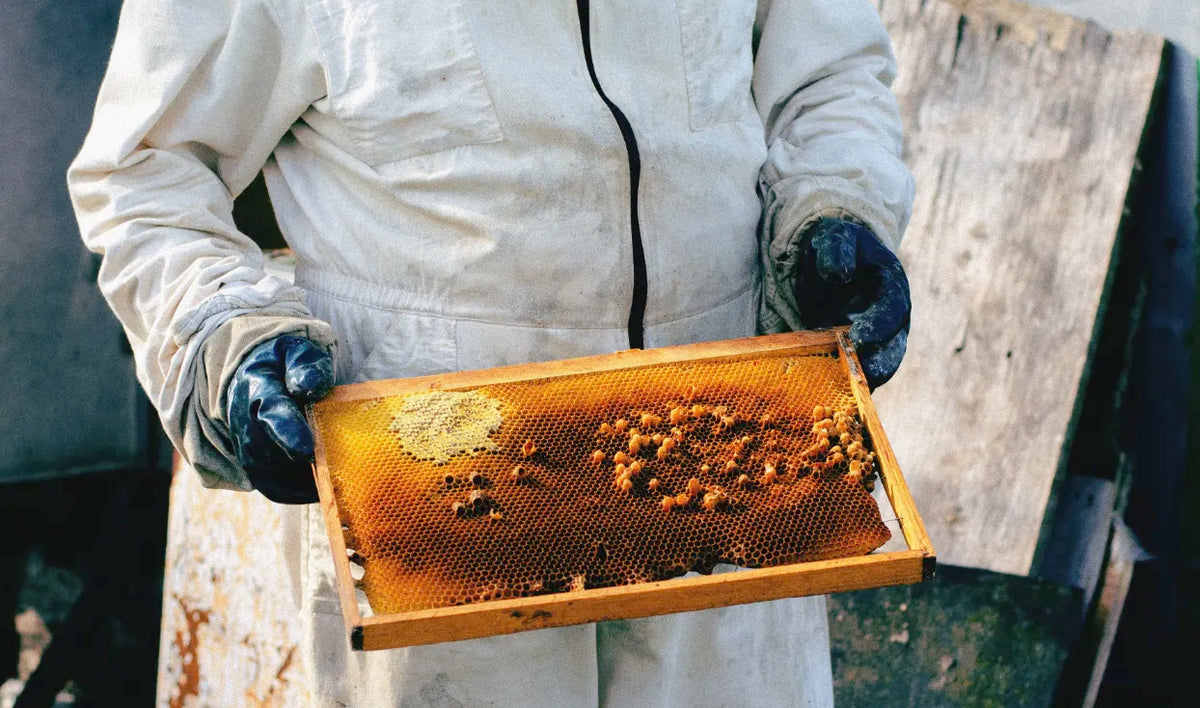
After the final batches of honey are harvested and the winds turn cold, the bees start clustering for winter survival. Winter beekeeping demands a ‘less is more’ approach. Just keep the bees fed, the colony dry and free of intruders.
Colonies have fewer opportunities to build stores through foraging.
So, how to approach this crucial period and make sure the bees are alive to see the spring? This guide tells you exactly what beekeepers do in the winter.
We will approach the process month by month, starting from October till the month of February.

TL;DR
- Prepare hives in October by checking winter stores, fitting mouse guards, ensuring ventilation and monitoring Varroa levels before temperatures fall further.
- During winter beekeeping, avoid opening hives unnecessarily. Observe entrance activity, clear dead bees and use hefting to check food reserves without disturbing the winter cluster.
- During December and January, monitor food reserves and pest levels. Use an authorised oxalic-acid product only when monitoring indicates treatment is required, and follow the product label and record-keeping requirements.
- February brings brood expansion and faster food consumption. Check reserves regularly, watch for isolation starvation and ensure bees have access to water for brood rearing.
- As spring approaches, prepare your bee suits, gloves and veils for the new season. Check for worn seams, damaged zips and holes so your protective gear is ready when needed.

October
October is the month to get the hive ready for the long upcoming winter.
The first step in beekeeping during winter is ensuring the colony has enough reserves to get by. The National Bee Unit guideline says that an average colony needs 18–22 kg of stores throughout the winter. A full British Standard brood frame holds about 2.2 kg. Colonies differ in the amount of stores they hold and require. Assess each colony individually, taking account of its size, local conditions and existing reserves.
As temperatures fall, syrup may become less suitable. Where feeding is required in colder conditions, use fondant rather than liquid feed.

Rodents are major antagonists for beekeeping in winter. As temperatures fall, mice may seek shelter in hives. Fit a mouse guard that prevents mice from entering while allowing bees to move freely through the entrance. Where woodpecker damage is a risk, fit suitable wire mesh around the hive, ensuring it does not restrict bee movement or ventilation.
Another essential that bees need in winter is adequate ventilation. Consider an open mesh floor where appropriate for the hive design, as it can help reduce moisture build-up.
And to prevent condensation getting any moisture inside the hive, keep the wooden floors tilted at an angle.
October is also the time to take a Varroa count again. Varroa mites are considered pests for bees that can weaken colonies and contribute to winter losses if left unmanaged.
Winters are treacherous, but Varroa mites can be even more of a headache if they aren’t kept in check.
November
By November, many colonies will have formed a winter cluster to conserve heat. Avoid opening hives unnecessarily, as disturbance can chill the cluster and disrupt the colony. Use external observation and hefting wherever possible.
Monitor the situation from the outside. On milder days, even at temperatures around 6°C, some entrance activity may indicate that the colony is active. However, limited activity does not necessarily mean the colony has died.
This is the time for hefting, a practice very helpful in beekeeping winter care. Carefully lift one side of the hive to assess its weight and estimate the remaining stores. If the hive feels unusually light, stores may be running low. If it takes effort, you can rest assured for now.

Even in well-managed colonies, some bees will die during winter. Beekeepers call this a ‘winter dead-out’. If a colony dies, review possible causes and record the loss. Avoid disturbing other colonies unnecessarily and continue routine winter monitoring.
Continue monitoring the remaining colonies and clear dead bees from the entrance where necessary to maintain ventilation and access.
December and January
Avoid opening hives routinely. Continue monitoring externally for signs of rodent activity or other problems.
A brief opening may be necessary to administer an authorised Varroa treatment or provide fondant, but only when required and under suitable conditions. Follow the temperature range stated on the authorised product label. Do not assume that 10°C is suitable for every Varroa treatment or application method.

A major decision in beekeeping in the winter are the varroa treatments. The checks in the past two months will tell you whether the late summer treatment worked and if your hive still needs a winter treatment.
The levels should be kept below 1000 mites for safety. Higher infestations increase the risk of damage from mites and associated viruses, but the risk to an individual colony depends on several factors, including colony strength and disease pressure.
Give the hive an oxalic acid treatment if needed. Note that a treatment would only work on a broodless colony, because oxalic acid does not reach mites inside sealed brood cells. Most colonies are broodless in winter months, especially in the cold UK climate but it is still wise to check once.
Remember to keep checking if the reserves are enough by lifting the hives. If they are running low, feed them fondant.
February
Bee activity often increases in February as colonies begin expanding brood. As brood rearing increases, colonies may consume stores more quickly than in previous months. Monitor stores regularly to reduce the risk of starvation.

But do you know that your bees can still starve when there are enough reserves? That means either the bees are in a cluster or rearing brood so they are physically cut off from the stores. This phenomenon is termed ‘isolation starvation’, a particularly common issue in beekeeping during winter.
Frames of stores can be moved next to the cluster without splitting the brood nest
Bees would also need water to make brood food and make sure that the eggs hatch.
Now your colony has braved another winter and it is the time to look ahead. The warmth of spring is not too far, the beekeeping season kicks off, so keep your tools and beekeeping gear ready.
Stores will deplete even faster as the hive expands in March and April so make sure the stores are enough to get by. You should have at least 4–5 combs of stores that will be about 9 kg.
Refer to this guide for more information about spring feeding. Note that this guide is only for England and Wales.
Things to Remember
-
Never open the hives i.e. do not take the frames out. Sit back and observe.
-
During winter beekeeping, do not feed the bees any homemade fondant recipe. Only feed them fondant sourced from certified sellers.
-
Before the spring arrives, check your bee suit and jacket zips, seams, veil mesh and gloves for any wear, tear or holes. This is to make sure that you have replacements when they are actually needed.
-
As suggested by National Bee Unit guidelines, only use licensed veterinary medicines for treatment of Varroa. Note: SaftaBee’s Bee suits have sting protection, but they cannot handle your safety during Varroa treatments.
Conclusion
During winter, the preservation of the hive and maintaining bees for the beekeeping season that lies ahead is crucial. The primary concern of beekeeping in the winter is keeping the bees full and never letting the reserves run out.
Along with that focus on keeping the hive undisturbed and control pests like varroa and rodents. However, do not take the frames out, observe through the hive weight and keep the entrance clear.
Lastly as spring arrives, keep checking the feed and prepare your suits, gloves and veils. And if you are looking to buy any bee related safety equipment, take a look at SaftaBee’s website.
Frequently Asked Questions
Should I open my hive in winter?
No, you should never open the hive in winter. Opening a hive can disturb and harm the bees. Check from outside and lift the hive to judge if the bees need more feed.
How do I know my bees are alive?
Watch the entrance for activity on a milder day, and clear any dead bees blocking it. You can also gently tap the hive, and if you hear a buzz or two when you press your ear, it means the bees are alive.
What do I feed bees in winter beekeeping?
You need to feed fondant over the crown board feed hole. Syrup is for autumn not winters. Because of the low temperatures, it can crystallize.
Do I have to treat varroa in winter?
Only if monitoring says so. If the late summer treatment was enough, there is no need for a winter treatment. If you do, use a UK-licensed product, follow the label and keep records.
Share:
Best Gardening Gloves for Women (UK): A Fit and Task Guide
Beekeeping for Beginners UK: How to Start