
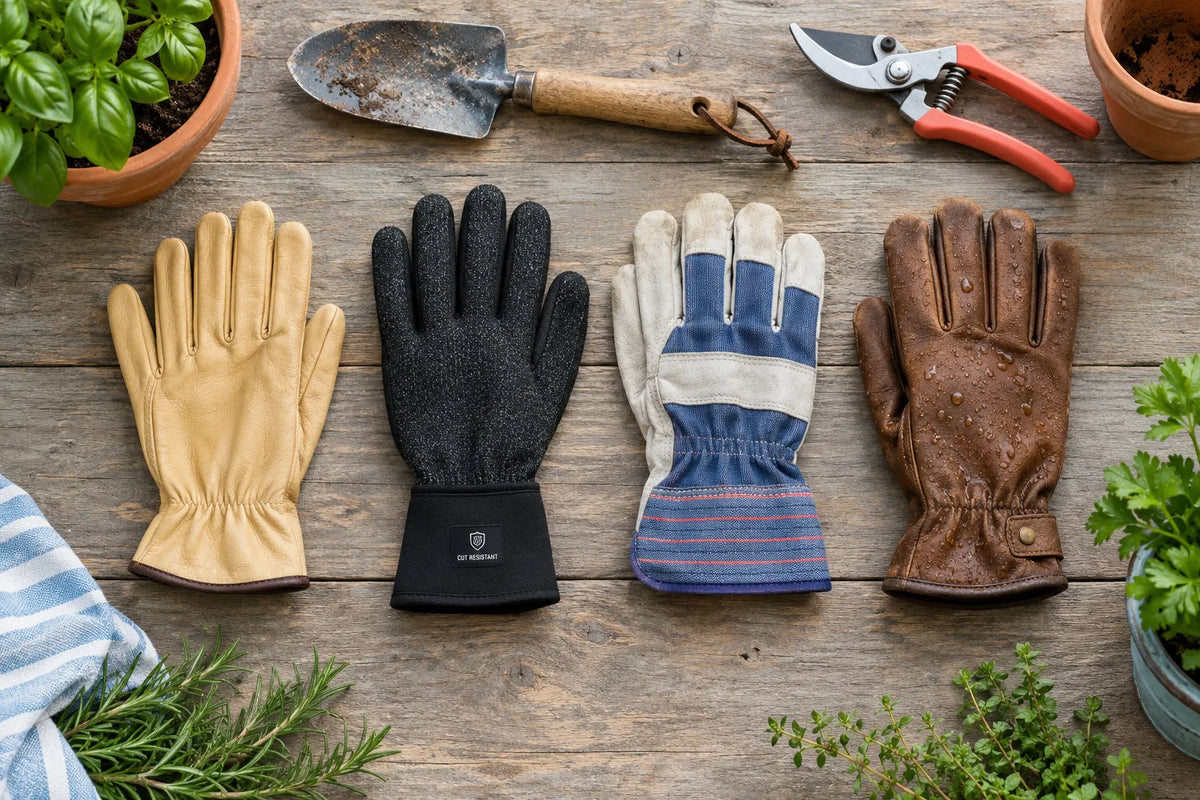
Many people carry out garden work without gloves because they prefer direct contact with soil and plants. That raw feeling of connecting with nature is unmatchable, no doubt about that.
But we often get a thorn or a rash because of skin irritation. And surely a cut being infected by germs can seem like a small inconvenience. But it can snowball into a big deal if they aren't dealt with properly.
And wearing gloves is one of the ways you can protect your hands, and ultimately your health.
But no one glove can do all the weeding, planting and digging. Different gloves are better suited to different jobs.
Let’s break down these best gardening gloves in the UK guide task-wise.
Key Takeaways
- Gardening gloves protect your hands from cuts, germs, irritant plants and harmful substances in soil. Wear a dust mask when handling compost and wash your hands after gardening.
- Thin, breathable gloves offer better flexibility for weeding, planting and potting. Choose a comfortable pair that allows you to handle seedlings and small plants with ease.
- Roses, brambles and pruning require thicker gloves with leather palms, cut protection and longer cuffs to help protect your hands and arms from thorns.
- Digging and heavy garden work call for durable rigger gloves with reinforced fingers, leather palms and knuckle protection. For cold, wet conditions, check water resistance and EN 511 ratings.
- Choose gardening gloves based on your task, hand measurements and required protection. SaftaBee offers options for everyday gardening, thorny plants, heavy work and colder weather.
Why Wear Gloves in the Garden
As advised by the Royal Horticultural Society, gloves are an easy way to protect yourself from the infections that one can catch while working with soil, compost or standing water.
Cuts and grazes can occur when working with thorny plants or tools. Soil can contain bacteria, including those that cause tetanus, so clean wounds promptly and ensure tetanus vaccination is up to date.
Leptospirosis, including Weil’s disease, can be associated with contact with water or soil contaminated by animal urine. Avoid direct contact with potentially contaminated water where possible and wash hands after gardening.

Soil is also likely to contain pesticides and chemicals which might be harmful.
But all these risks can be simply minimised by putting on gloves when you work. You should also use a dust mask when working with compost, wash your hands after gardening and make sure you are getting your tetanus jabs regularly.
Weeding, Planting and Potting
When you handle delicate seedlings and weeds, you need precision and flexibility. Thin and breathable gloves work the best since they give more feel. Thick leather gloves can be hard to work with in these tasks.
The RHS suggests using thin latex gloves for such delicate work. Go for latex-free gloves if you suffer from allergy.
What SaftaBee Has in Store?
Our Goatskin gloves work well for such light everyday work. The spandex back supports breathability, while the wing thumb and elasticated cuffs are designed to support comfort and movement.
Roses, Pruning and Brambles
The roses adorning your garden are bound to have thorns. So you need more than thin gardening gloves.
While pruning your roses, make sure to have a thick glove with cut resistance. But the same glove pair wouldn't help with weeding and potting.
That's why you need more than one pair of gloves for your garden so that you get cut protection but also flexibility to handle the twigs for pruning.
Look for a balance of cut protection and sufficient flexibility to handle stems and branches during pruning. Even better if there are padded knuckles for extra protection.

What SaftaBee Has in Store?
SaftaBee’s thorn proof gardening gloves are perfect for when you are working with roses and brambles. Crafted with natural cow leather and synthetic materials for optimal performance, they provide cut protection while being silicone-free and allergy-friendly.
Digging and Heavy Jobs
Heavy jobs like digging and clearing earth need a pair of gloves that are durable and can tolerate impact.
Consider rigger-style gloves with leather palms, reinforced high-wear areas and a fabric back for comfort. Check the product specification for knuckle protection, as this is not standard across all designs.

What SaftaBee Has in Store?
For heavy work in your garden we have rigger gloves in hi-vis colours. The palm is made of cow split leather; there are reinforced fingers and thumbs for improved durability. With weather-resistant design, they also have an elasticised short cuff that can be used to make gloves adjustable.
Wet and Cold Days
For light rain or snow, fur-lined leather gloves can provide some resistance to moisture and help retain warmth. But since wet gloves feel colder, dry them after use. It is also wise to keep another pair in case you need a change.
Standard leather gloves are generally water-resistant rather than fully waterproof, although performance depends on the leather treatment, lining and construction. For heavy rain or tasks involving prolonged water contact, choose gloves specifically designed and tested for waterproof performance.
One indication of waterproof performance is an EN 511 water-permeation rating of 1. This means no water penetration was recorded during the specified test. Check the full EN 511 rating and product specification before relying on the glove for prolonged wet work.

What SaftaBee Has in Store?
We stock cow grain leather work gloves, which are warm and water-resistant and especially suited for wet and cold days. The design provides superior grip while also being breathable.
Best Gardening Gloves For Men
The average male hand size is larger compared to females. That's why men's and women's gloves are listed separately.
But it is not that they are inherently different; it's just about the sizing. However, certification requirements do not outline any distinction between the gloves of the two genders.
The key to a right fit comes with accurate measurement of the hand size. As long as you measure right, there wouldn't be any problems with the fit.
What SaftaBee Has in Store
At SaftaBee, our gloves are suited for both men and women. For larger hands, the size table puts size 10 (XL) at about 25 cm of hand circumference and size 11 (XXL) at about 26 cm. What you need to make sure is that your pair fits you well.
For more information about measurement and sizes, refer to our sizing guide.
What to Check Before You Buy?
Before you go ahead and order the best gloves for gardening, go through this list for one last check.
-
Fit: Measure both hands and use the larger measurement with the manufacturer’s size chart.
-
Thickness and Dexterity: How thick the gardening glove should be depends on the job. Do not buy a pair without taking the work into account.
-
Water: Product titles do not always provide reliable information about water protection. Check the product description for water-resistant or waterproof claims and any supporting test information.
Conclusion
A pair of sturdy gloves is essential for your gardening time. They protect against dirt, germs and chemicals that may be in the soil and also keep your hands neat and tidy.
Weeding is delicate and needs thin gloves. But you can't prune roses with the same pair. For each task, you need the right pair. Furthermore, make sure you have got just the right size for smooth and efficient work.
Looking for the best garden gloves in the UK? Then head over to SaftaBee, browse our collection and order.
Frequently Asked Questions
Do I need gloves for everything in the garden?
Not always. But it is advised that you use gloves when working with soil, compost, fertiliser, pesticides and irritant plants to minimise any risks.
What should I wear when turning compost?
A pair of gloves and a dust mask is non-negotiable. You can also wear a work suit to shield your skin from mould and debris. After the job, thoroughly wash your hands.
Are leather gardening gloves waterproof?
Treated leather is water-resistant. It means they can only repel light moisture and rain and are not completely waterproof.
Is there a difference between men's and women's gardening gloves?
It depends on the manufacturer. Mostly the difference is due to the difference in hand shape and size. Both kinds of gloves are functionally the same.
Share:
Beekeeping for Beginners UK: How to Start